
Stage 2 - A masterclass in sprinting
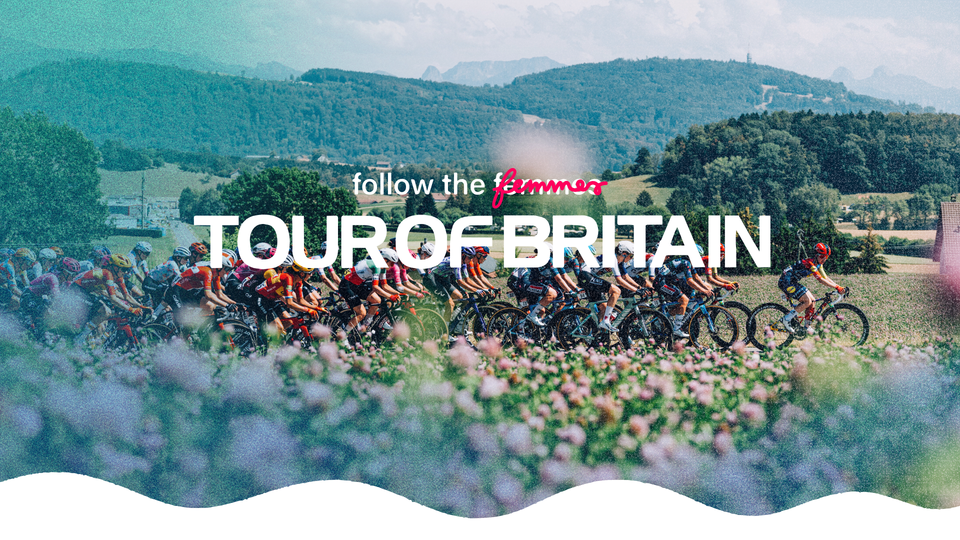
Stage 2 of the Lloyds Tour of Britain Women was eventful for more reasons than one.
On paper, the shape of the stage was interesting. Most of the climbing was concentrated into the opening 40kms, with two significant climbs early before a predominantly flatter second half.
That created a fairly obvious opportunity: if anyone wanted to stop Lorena Wiebes from winning again, they needed to make those opening climbs count.
Add cold temperatures, rain and narrow roads and you certainly had potential to make the race difficult.
Uno-X had to attack
One team whose intentions were clear almost immediately was Uno-X Mobility.
After missing the front group yesterday and losing time on GC, they couldn't afford to simply sit in the peloton and wait for the sprint. They needed to create opportunities.
Alberte Greve was the first to attack and quickly opened a useful advantage. Marta Jaskulska of Human Powered Health attempted to bridge across, and for a while it looked as though they might arrive at the first QOM together.
But there's something we've now seen on both stages of this Tour: as soon as the race approaches a classified climb, the peloton comes alive.
In a race where seconds and classifications can matter so much, teams don't want to simply hand those opportunities to a breakaway.
The gap disappeared and the battle for the QOM points came from the peloton, with Swiss champion Steffi Häberlin of SD Worx-Protime ultimately proving strongest.
Shortly afterwards, Uno-X tried again.
This time it was Katrine Aalerud.
It was a brave move from one of their GC riders, and she managed to establish an advantage of around a minute. Having already lost time yesterday, there was really very little downside to trying.
Then the race changed completely.
When racing suddenly stops
As the riders approached the second classified climb, an accident unrelated to the race forced the organisers to stop proceedings.
A race neutralisation always looks relatively simple on television. Everyone stops, waits, and eventually starts again.
As a rider, it can be anything but simple.
Especially on a day like today.
Everyone was already wet and cold. Your body has warmed up to racing intensity and suddenly you're standing on the side of the road with no idea whether you'll be there for five minutes or half an hour.
That's when you see different strategies.
Some riders get into team cars. Others keep moving to stay warm. Everyone tries to find extra clothing while simultaneously eating and drinking because, unexpectedly, you've been given an opportunity to refuel.
I've experienced this myself at both Amstel Gold Race and the Tour of Britain, and restarting can be incredibly disruptive. Your body cools down and then suddenly you're expected to go from almost zero back to race intensity.
The remainder of the climb and descent were neutralised, before racing restarted on safer, flatter roads with around 60kms remaining.
Importantly, Katrine was given back the advantage she'd held before the race was stopped.
And then everyone had to effectively start racing again.
Perfect conditions for a Norwegian
Once Katrine was eventually caught, another attack came and this was probably my favourite ride of the day.
Just 19 years old, Oda Aune Gissinger of Team Hitec Products Fluid Control went solo.
It was a really intelligent moment to attack.
The peloton had already been through a disruptive neutralisation. Riders were cold. The rain was coming down again. Motivation to chase wasn't necessarily particularly high.
For a young Norwegian rider accustomed to training in cold and wet conditions, however, this was almost an opportunity.
Oda committed.
She spent much of the second half of the race alone at the front, while various riders tried unsuccessfully to bridge across.
Once again, we're seeing young riders at this Tour willing to put themselves out there rather than simply trying to survive within the bunch. At 19 years old, that's impressive.
Behind, Pfeiffer Georgi was particularly active. Racing on home roads, she repeatedly looked for opportunities to get clear, while other teams without a straightforward route to victory also tried to disrupt the inevitable sprint.
But Oda kept fighting.
It wasn't until 4.4kms to go that the peloton finally caught her.
And then the lead-out battle began.
Watch SD Worx carefully
This was probably the most interesting tactical part of the race for me.
There were plenty of teams trying to organise themselves.
UAE Team ADQ were visible. AG Insurance-Soudal produced a really strong lead-out around Kim Le Court-Pienaar.
And then there was SD Worx-Protime.
They have the fastest sprinter in the world, yet what's fascinating is how rarely they behave as though all the pressure is on them.
They don't panic.
They don't necessarily put themselves on the front with five kilometres remaining and burn through their entire team.
They wait.
Other teams spend energy fighting for the front while SD Worx sit slightly behind, together and protected.
Today, they deliberately held the right-hand side of the road approaching the final kilometre.
Then came the move.
As the road swept left, Mischa Bredewold accelerated hard from the right, moved across to the left and, in doing so, effectively closed the door on a large number of riders who were trying to come through.
That was the clever part.
It wasn't only about moving SD Worx to the front. It was about taking control of the road itself and cutting off the momentum of the teams that had spent so much energy building their own lead-outs.
In a matter of seconds, SD Worx had gone from sitting quietly on the right-hand side to owning the front of the race.
It was patient, deliberate and incredibly well executed.
And then all they had to do was deliver Lorena.
Lorena's greatest strength might be her patience
Yes, Lorena Wiebes is extraordinarily fast.
But if you're trying to understand why she's so difficult to beat, don't only watch her legs.
Watch how calm she is.
There are moments in these finishes when she appears almost boxed in. Another sprinter might panic, move too early or waste energy trying to force open a gap.
Lorena waits.
She protects one side of herself against the barriers or the edge of the road, reducing the number of directions from which someone can pass her.
And then she waits for someone else to make the first move.
That's the key.
Someone launches. A gap opens.
And suddenly the switch flips.
Her acceleration is extraordinary. Her cadence jumps, the speed difference becomes immediately visible and within a few pedal strokes she's created separation that nobody can close.
It's predictable in the sense that we know what is likely to happen when Lorena arrives at a sprint.
But watching how she makes it happen never gets boring.
It's a sprinting masterclass.
So how do you beat her?
That's now the question facing everyone else.
Kim Le Court-Pienaar had another strong day, finishing third and continuing to collect valuable seconds. AG Insurance-Soudal have made their GC intentions very clear over these opening two stages.
Tomorrow brings the race's biggest opportunity to change things.
It's the queen stage, and importantly, it doesn't finish with a classic flat sprint. The final kilometres include short, sharp climbs before an uphill finish, which changes the equation completely.
There isn't one long mountain where a pure climber can simply settle into a rhythm and ride Lorena off the wheel. Instead, the challenge will be to make those final climbs hard enough to expose the difference between a sprinter who climbs incredibly well and the riders who are genuinely targeting the overall classification.
If Lorena arrives at those final climbs with relatively fresh legs, she's still going to be incredibly difficult to beat.
But an uphill finish creates uncertainty.
Can the GC teams make the race hard enough before the final kick? Can they force Lorena to respond to repeated accelerations? Can someone create separation before her sprint becomes a factor?
That's what makes tomorrow so interesting.
We've seen twice now what happens when Lorena reaches a conventional sprint finish.
Stage 3 will ask a very different question.
How far can the world's fastest sprinter go when the road turns uphill?
— Ashleigh
Member discussion