
The electrolyte most cyclists overlook - why sodium matters more than you think.

This July we're welcoming Precision Fuel & Hydration to the Collective as our Partner of the Month - and we think you're going to get a lot out of this one.
Precision Fuel & Hydration was built around a simple but important idea:
That individual differences in physiology matter, and that the best fuelling and hydration strategy is the one that's right for you specifically - not for an average athlete.
They work with endurance athletes at every level, helping them take a more personalised, science-led approach to what they eat and drink before and during a ride.
Last week, we looked at fluid : how much you're losing on the bike and why your sweat rate is more individual than most people realise.
This week, Precision Fuel & Hydration are taking us one step further - because drinking enough is only part of the picture.
SODIUM - THE ELECTROLYTE THAT ACTUALLY MATTERS
You lose more than water when you sweat. Sodium (the main electrolyte in sweat) leaves with it, and how much you lose varies enormously from person to person. Some cyclists lose relatively modest amounts. Others are losing three or four times as much per litre of sweat. And you probably can't tell which camp you're in just by how you feel.
Why does it matter?
Sodium plays a central role in fluid balance, nerve function and muscle contraction. When sodium levels drop significantly during prolonged exercise, performance suffers and the risk of cramp and nausea increases. Replacing fluid without replacing sodium can actually dilute things further - a surprisingly common problem in longer events.
If you regularly experience fatigue, cramping, or that flat feeling late in a ride despite drinking well, your sodium losses may be the part of the puzzle you haven't addressed yet.
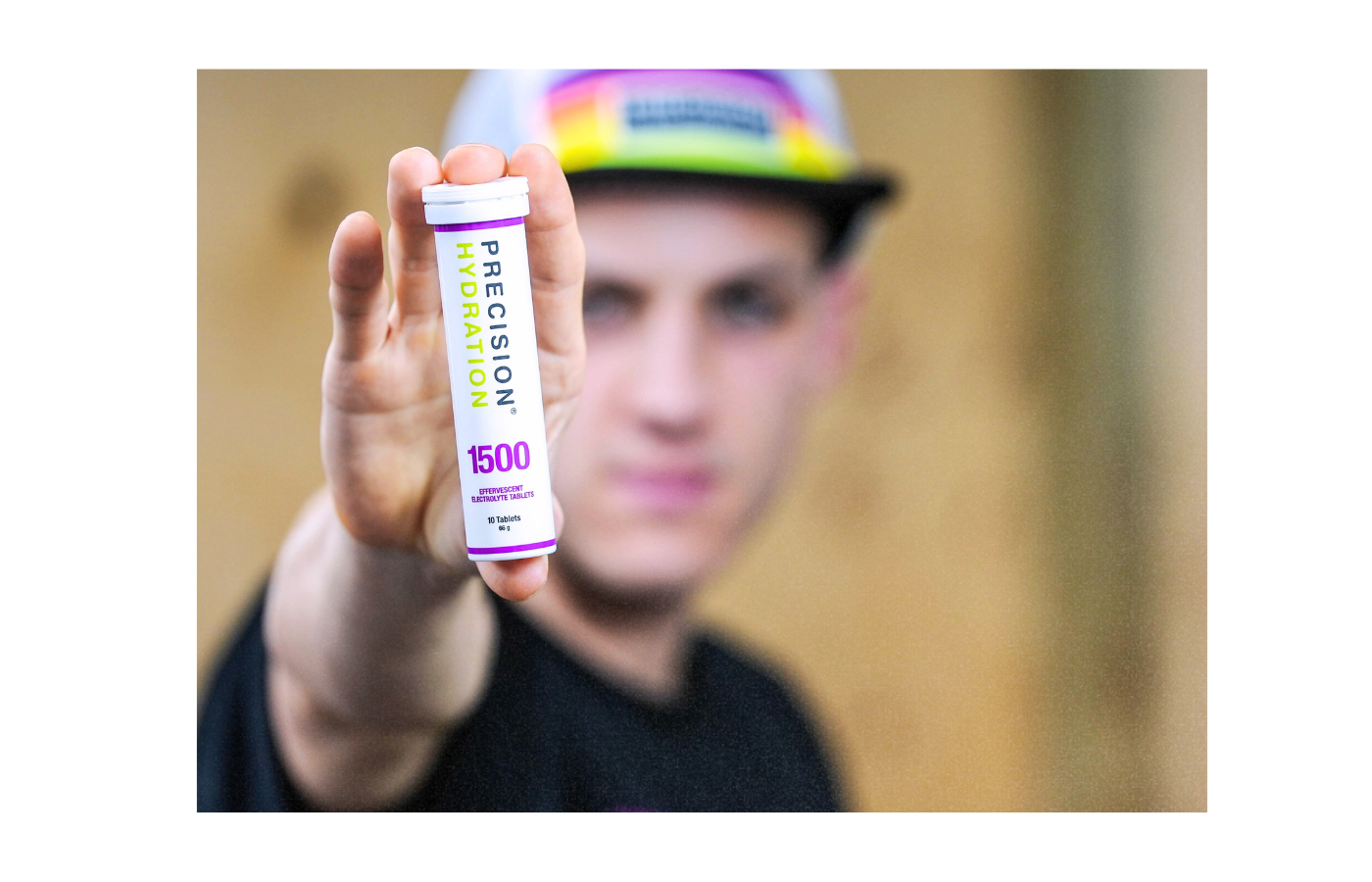
So how do you know where you stand?
A few indicators worth paying attention to, according to the PF&H team:
- White salt marks on your kit after a ride
- Craving salty foods after exercise
- Cramping that tends to appear late in longer or harder efforts despite consistent drinking
These are signs you may be a saltier sweater than average and that a standard electrolyte product might not be enough to keep you on top of losses during a long ride or race.
The most accurate way to find out is through sweat testing, which measures the actual sodium concentration in your sweat and gives you a number that reflects your individual physiology rather than an average. That number tells you whether a low-sodium electrolyte product is likely to be enough, or whether you need a significantly stronger intake to stay on top of losses.
Not ready to sweat test yet?
Precision Fuel & Hydration's free Fuel & Hydration Planner is a great place to start. t builds you a personalised race day strategy based on your event, conditions and physiology, taking the guesswork out of how to fuel, hydrate and when.
Next week we'll be looking at carbohydrates — how to fuel long efforts properly and why gut training is as important as leg training.