
Paris-Roubaix Femmes delivered everything — except the coverage it deserved
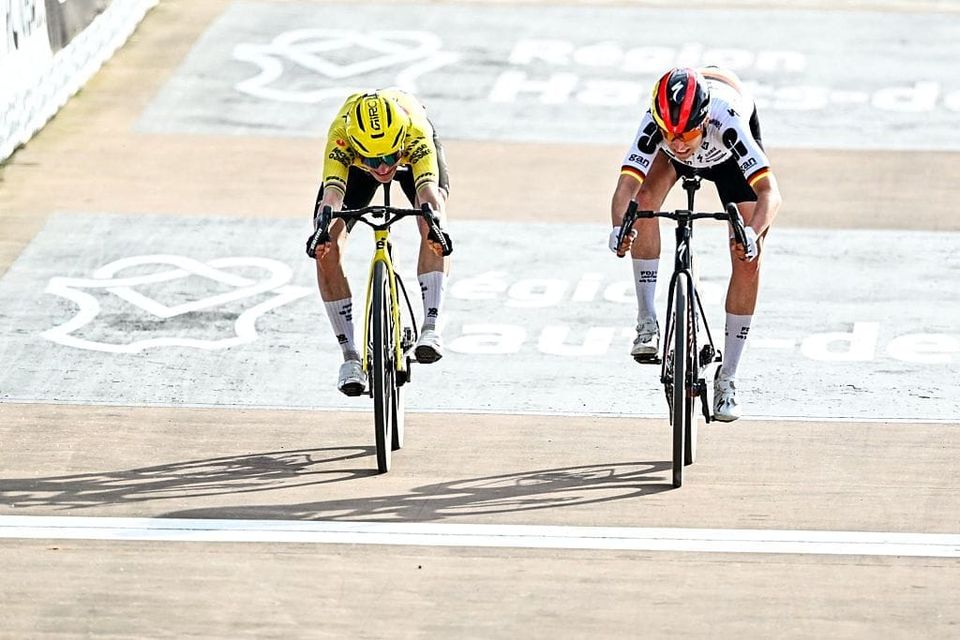
Paris-Roubaix Femmes delivered exactly what women’s cycling so often does: drama, tactical brilliance, emotional depth, and a finale that left everyone breathless.
And yet, somehow, we still only saw a fraction of it.
This year’s decision to place the race on the same day as the men’s elite, under-23, and junior Paris-Roubaix events came with understandable logic. On paper, it promised parity of atmosphere — the same packed cobbled sectors, the same roadside noise, the same iconic Roubaix crowds staying deep into the afternoon to cheer the women into the velodrome.
In that sense, it worked.
The fans showed up. They stayed. They gave the women’s race the same wall of sound and support that has long defined Roubaix weekend.
But the trade-off was impossible to ignore: the television coverage suffered badly.
By the time the live pictures came on air, we were left with only the final 50-odd kilometres — barely a third of the race. Yes, what we did get was spectacular. But women’s cycling should not have to rely on “the finale” alone to justify its value.
Because what was missing matters.
The early attacks. The first moments of tension. The riders who animated the race before the cameras arrived. The first sectors where positions were fought for and energy was spent. The riders who may never make the final selection, but whose efforts shape the race just as much as those who do.
Those stories disappeared into the gaps in coverage.
And that is exactly the problem.
The irony is that once the broadcast finally began, the race immediately reminded everyone why it deserves full coverage from kilometre zero.
What followed was a perfect illustration of why women’s cycling remains one of the most compelling products in sport.
At the heart of it was another statement performance from FDJ-SUEZ — a team that is rapidly redefining what collective strength looks like in the women’s peloton.
Franzi Koch’s ride was a display of power, intelligence, and confidence that felt symbolic of everything this team has become. Much like Demi Vollering’s dominant spring performances, it was another reminder that FDJ–SUEZ are not simply relying on individual brilliance. They are thriving because of depth, trust, and culture.
That may be their greatest strength.
Of course, Vollering remains one of the sport’s defining stars, and the team’s ability to rally around her is well established. But what makes this group exceptional is that when races take a different turn, they recalibrate instantly.
They do not panic. They adapt.
And crucially, every rider in that team still believes they matter.
That belief is visible in the way they prepare — altitude camps together, time spent bonding, training, building relationships, and creating a shared sense of purpose that clearly translates onto the road. It is also visible in the way their leaders celebrate teammates’ success. Vollering’s growth into a mature and generous leadership figure has become one of the most compelling stories in the sport: a rider whose own greatness now seems to elevate everyone around her.
This season alone, FDJ–SUEZ have now taken Monument-level victories with three different riders.
That is not dominance by accident. That is culture.
And then there was the race-winning move itself.
Koch forcing the decisive break with Marianne Vos, Pauline Ferrand-Prévot, and Blanka Vas immediately gave the finale its sense of inevitability. With two Visma riders present, the numerical advantage appeared obvious. Ferrand-Prévot’s commitment to working for Vos made perfect tactical sense, and given everything Vos has endured in recent weeks following the loss of her father, the emotional weight of what victory would have meant was impossible to ignore.
It made the closing kilometres almost unbearably compelling.
Who do you even root for in a moment like that?
Vos, the GOAT, carrying grief and legacy into the Roubaix velodrome.
Or Koch, one of the peloton’s most selfless riders, finally taking the kind of Monument victory her talent and years of sacrifice have long deserved.
What made Koch’s win so remarkable was the way she refused to let Visma’s numerical advantage dictate the finale. She kept forcing the race on the hardest sectors, repeatedly putting Ferrand-Prévot under pressure, and then launched that decisive late attack that briefly split the group again.
Even when Ferrand-Prévot clawed her way back before the velodrome, Koch never lost control of the moment.
Her track instincts came alive in the sprint.
Taking the inside line, forcing Vos the long way round, and then unleashing a devastating final acceleration, she turned what could have been a nervy head-to-head into a demonstration of precision and raw power.
The joy at the finish was unforgettable.
So too was Vos’s emotion in defeat.
And perhaps that is why Paris-Roubaix Femmes felt so significant, even in incomplete form: because even with only a third of the race shown, women’s cycling still produced one of the most gripping spectacles of the spring.
Imagine what we missed.
Women’s cycling should not have to keep proving itself in the final 50 kilometres. It has already proven it deserves the full stage.
Paris-Roubaix Femmes gave us another unforgettable finale.
Now the sport needs to make sure the next generation gets to see the whole story.
If you missed it, watch the highlights below.
In the meantime, there is something every one of us can do. Follow the riders. Follow the teams. Watch the races. Share the highlights and the Reels. Engage with the stories, the athletes, and the moments that deserve to travel further. Every view, every follow, every share helps women’s cycling take greater ownership of its narrative. Watch. Follow. Join us in building the future this sport deserves.
-- Ashleigh Moolman Pasio
Member discussion