
The final unpack: Looking beyond the race
A few days have passed since the Tour de France Femmes avec Zwift finished.
Life moves on quickly in cycling. Another race starts, another story takes over. But after spending 9 days following the Tour from a very different perspective this year, I wanted to allow myself some time to digest what I had seen - and, perhaps more importantly, what I had felt.
I was fortunate enough to race the first Tour de France Femmes avec Zwift in 2022, and again in 2023.
In 2024, I broke my back. I tried incredibly hard to make it back in time for the Tour, but eventually had to accept that racing it would have been irresponsible. Last year, not being selected was difficult enough that I wasn't ready to experience the race from the outside.
And, of course, I would have loved to have been on the start line this year, in my final season as a professional cyclist.
But I wasn't.
And strangely, that gave me an opportunity to see the Tour (and women's cycling) through a completely different lens.
It started long before this Tour
During the COVID pandemic in 2020, when racing stopped and there was very little exposure for our partners, I put my hand up to host a weekly women's ride on Zwift.
At the time, I was racing for CCC-Liv. Liv had already made a very deliberate commitment to women and women's cycling, something they continue to do today.
Every Monday, I hosted a women's ride.
And the response blew my mind.
Hundreds of women would join. They would talk. They would ask questions. They wanted to know about training, chamois, nutrition, equipment, confidence - all the things that women perhaps didn't always feel comfortable asking in other cycling environments.
It was very different from what I had experienced in real life.
For years, I had wanted to encourage more women into cycling. We tried women's camps at Rocacorba Cycling. But I began to understand that, as a professional cyclist, I could unintentionally be intimidating.
What if I can't keep up? What if I get dropped? What if I get a puncture? What if everyone else is better than me?
On Zwift, those barriers disappeared.
One woman summed it up perfectly:
"My avatar has no shame."
That sentence has stayed with me ever since.
Behind the safety of a screen, women felt confident enough to show up...and once they showed up, they started talking, learning, connecting and belonging.
That experience eventually became the Rocacorba Collective - an online community, open to everyone but championing women, with Zwift as its enabling platform.
And it taught me something I have carried with me ever since:
If we want more women to fall in love with cycling, community has to come before performance.
This Tour reinforced that belief
Walking around the Tour de France Femmes this year, I saw women everywhere.
Women's cycling communities. Female creators. Women who ride. Women who don't. Mothers with daughters. Families. Partners. People who had travelled simply because they wanted to be there.
And I realised that many of them weren't initially drawn there because they could tell you who was fifth on GC.
They were there because they felt part of something.
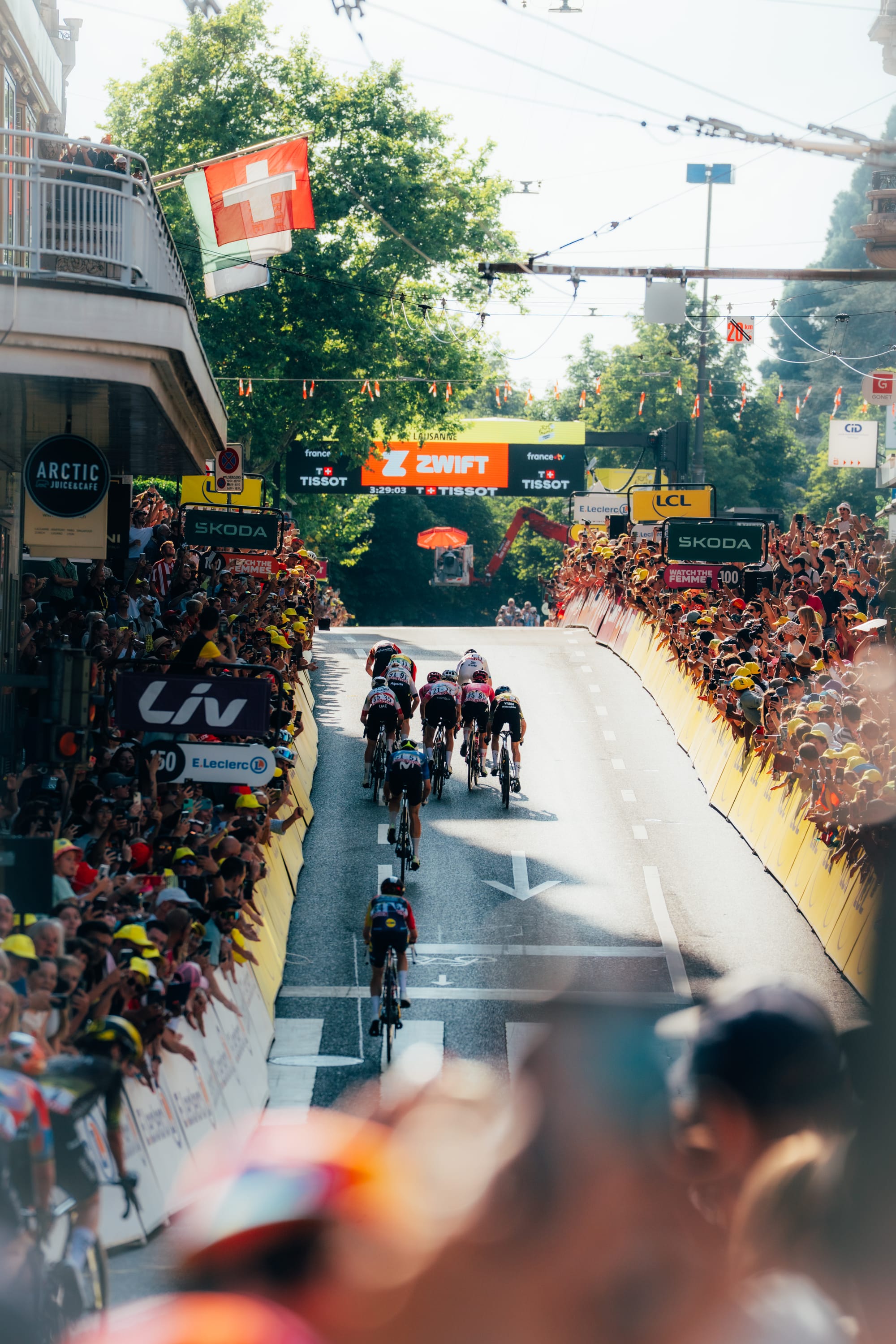
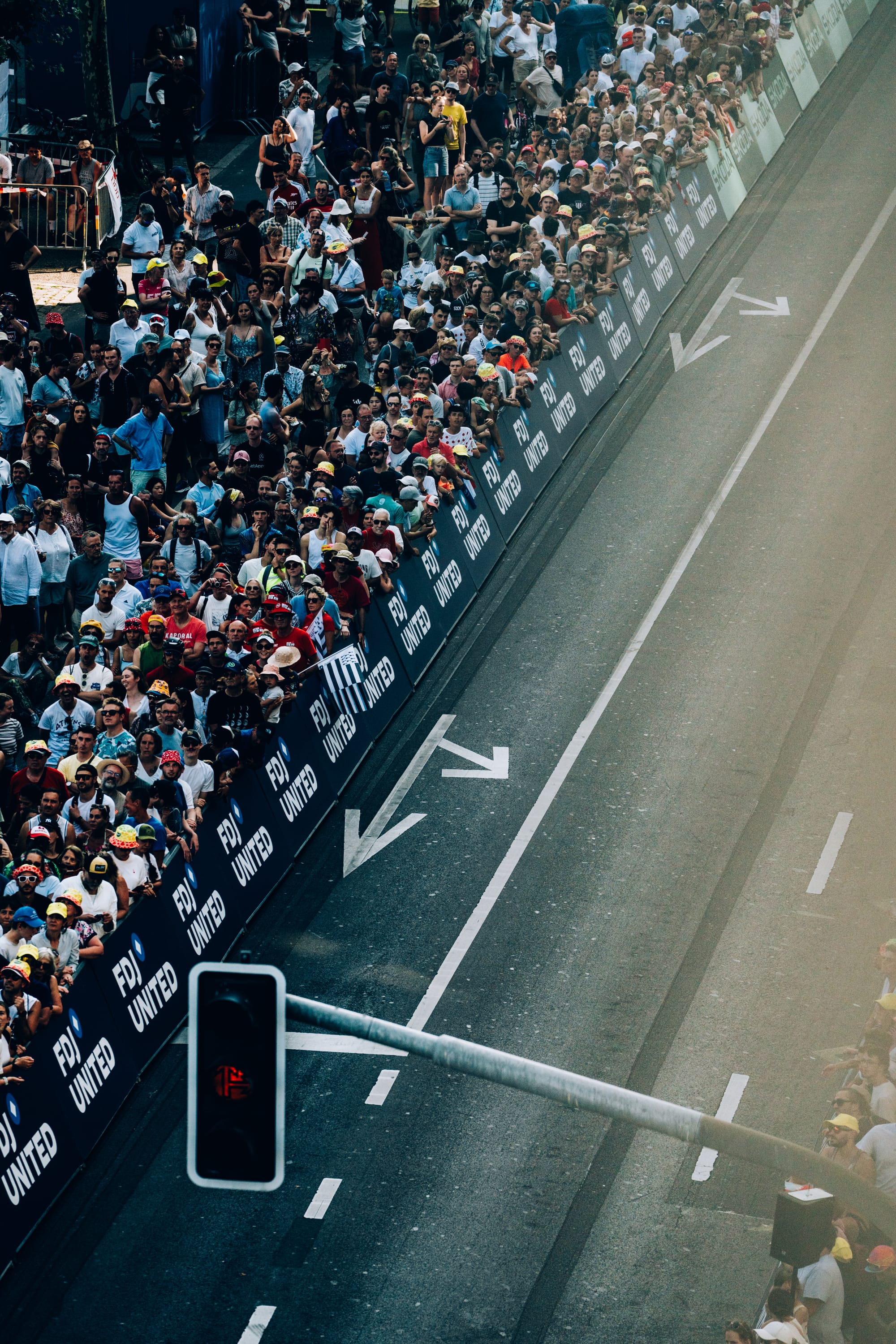
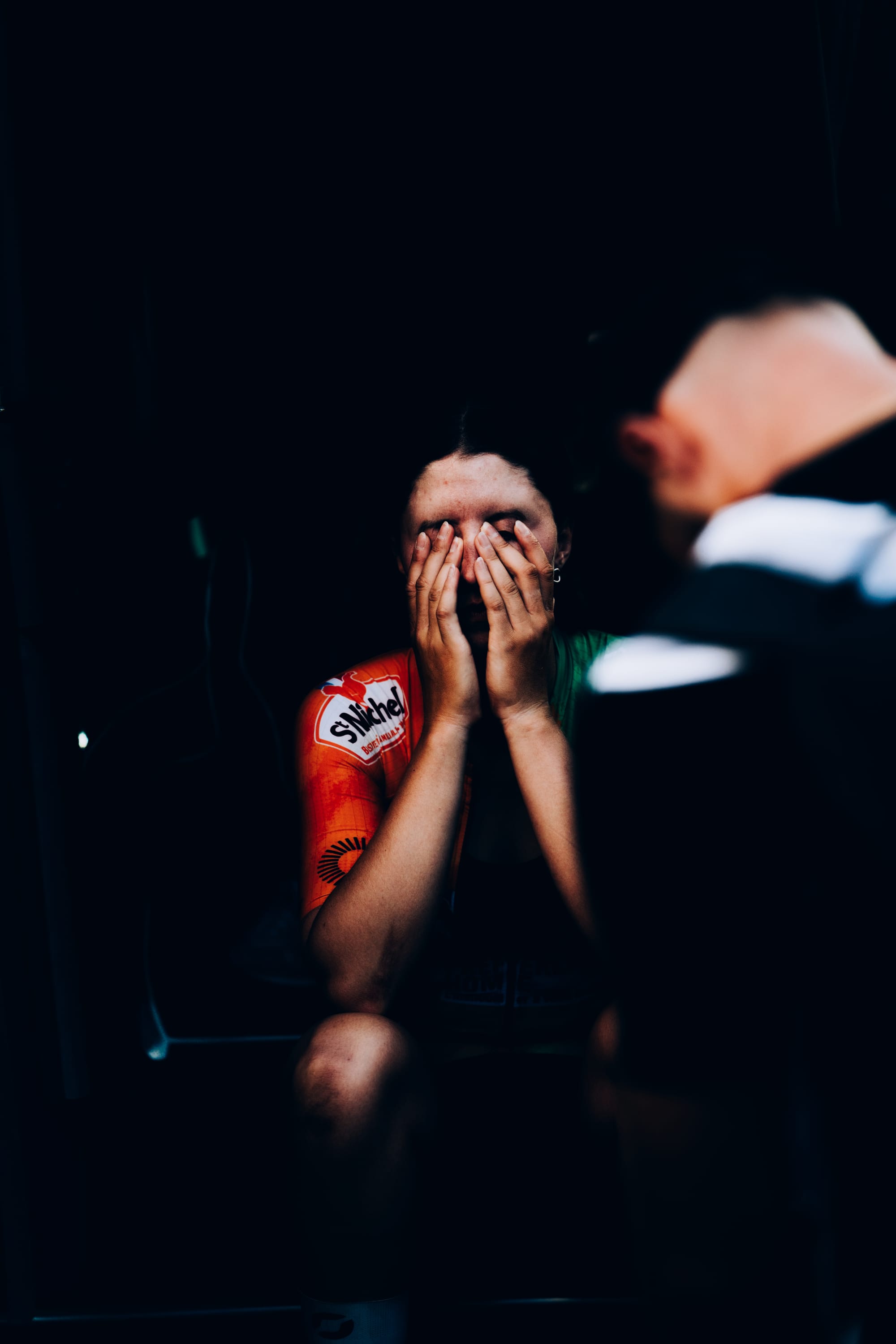
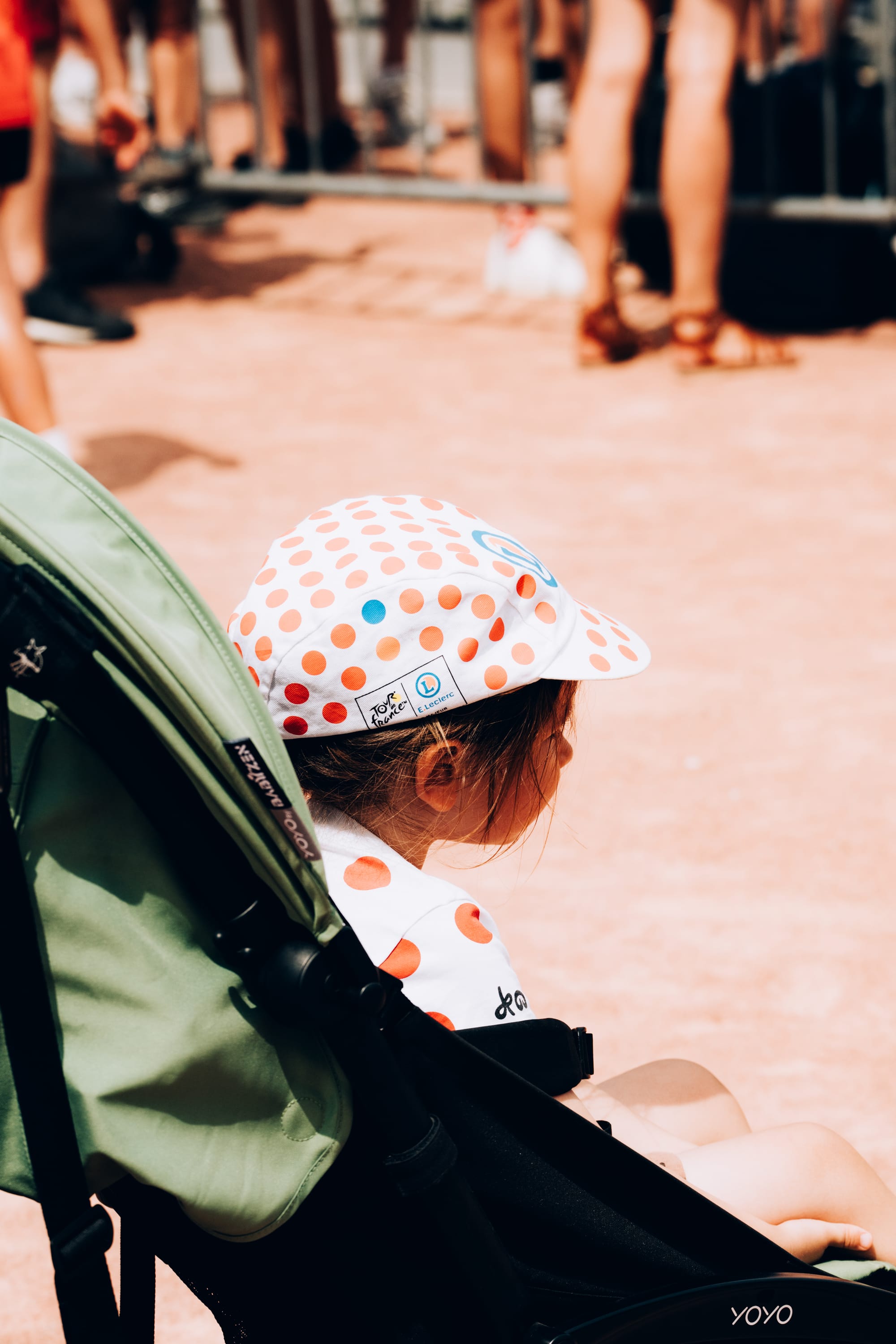
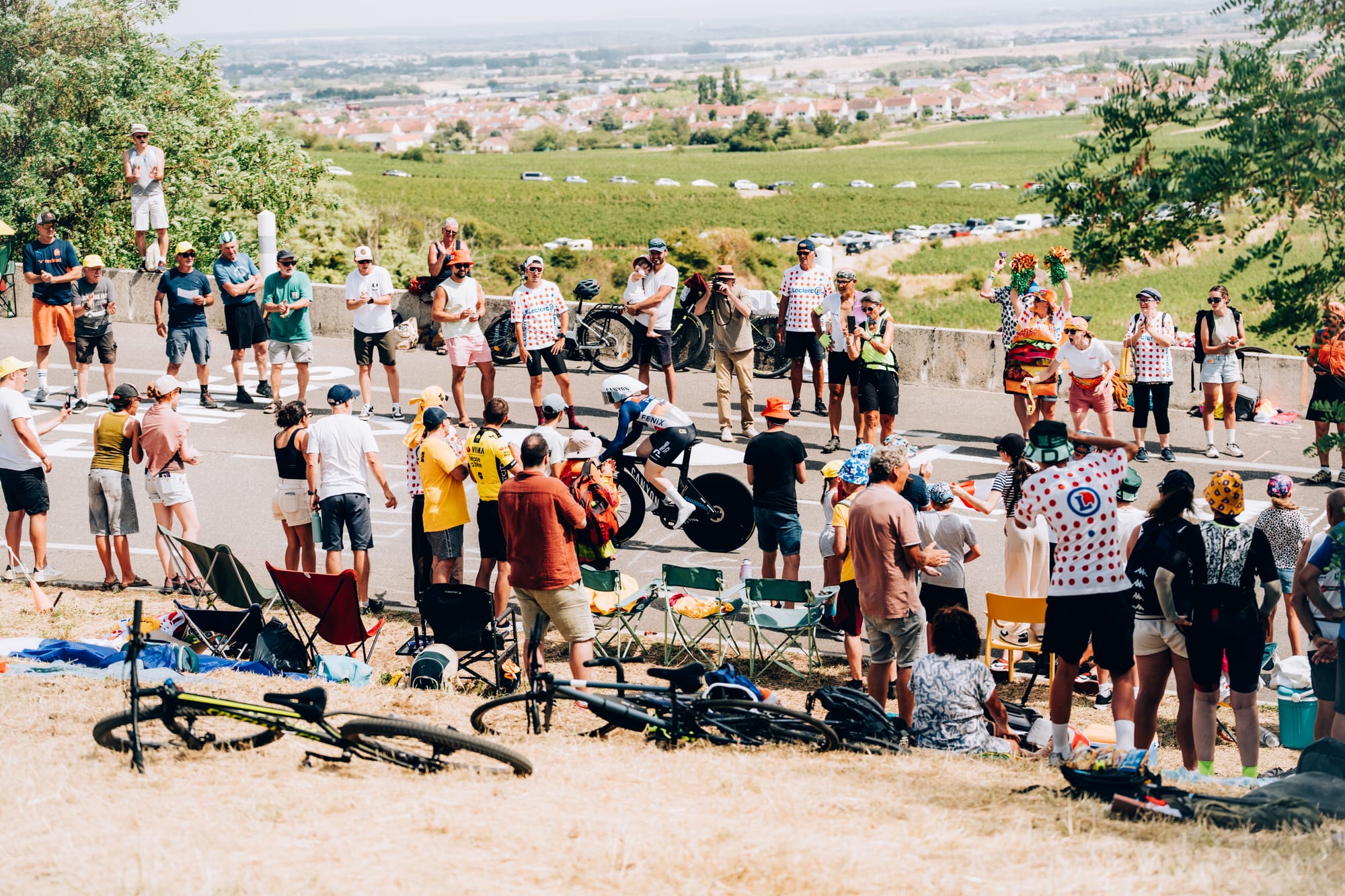
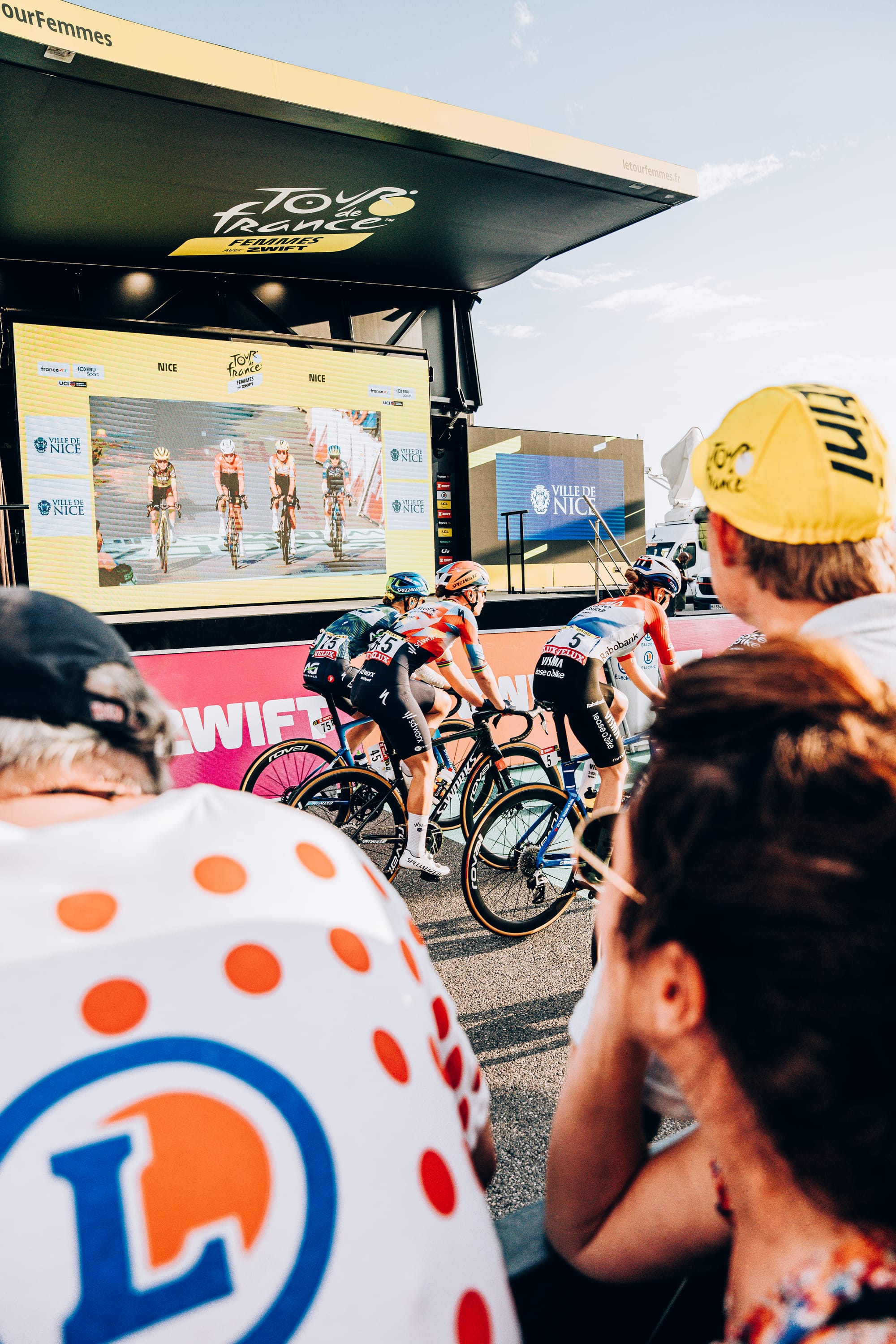
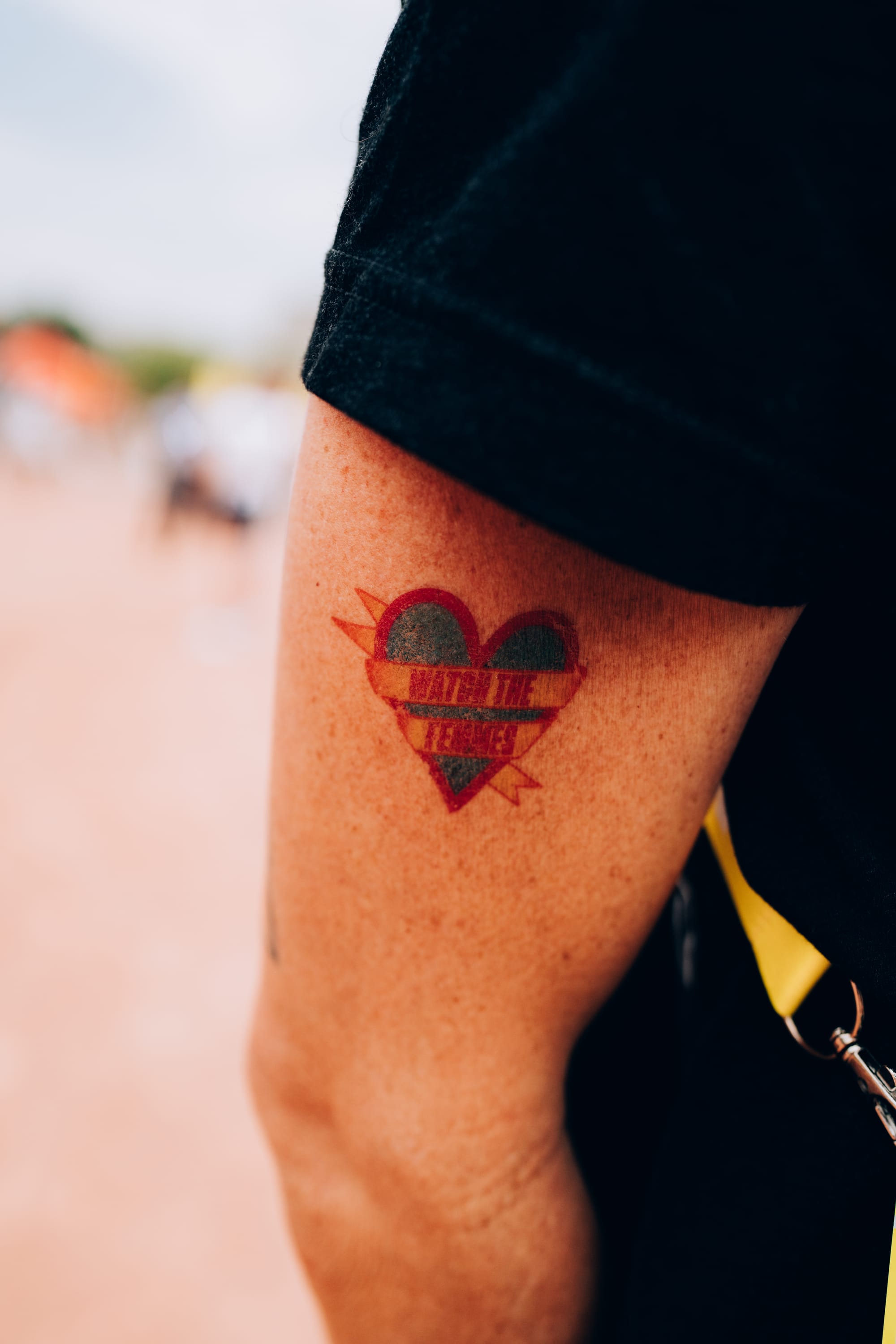
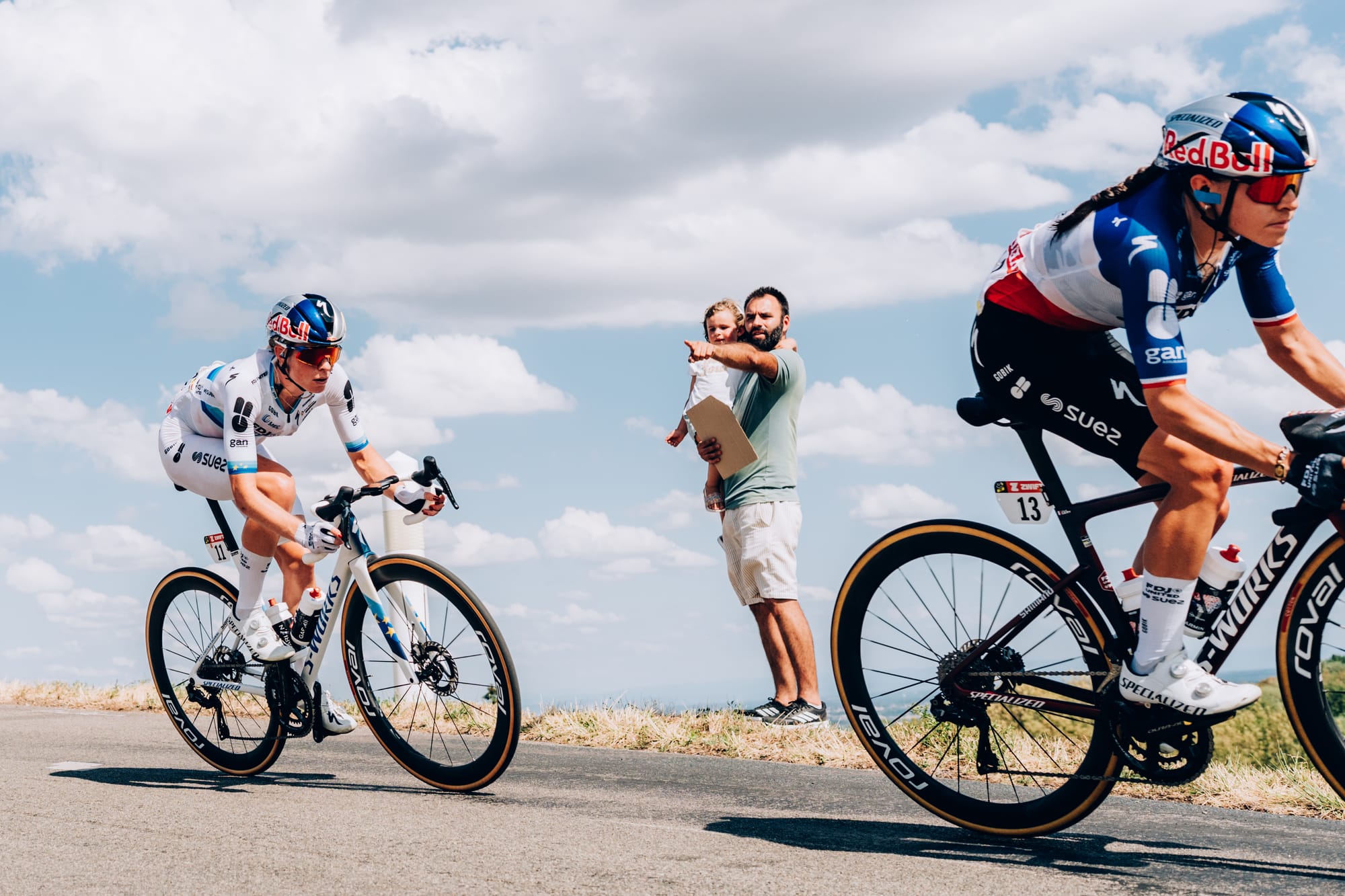
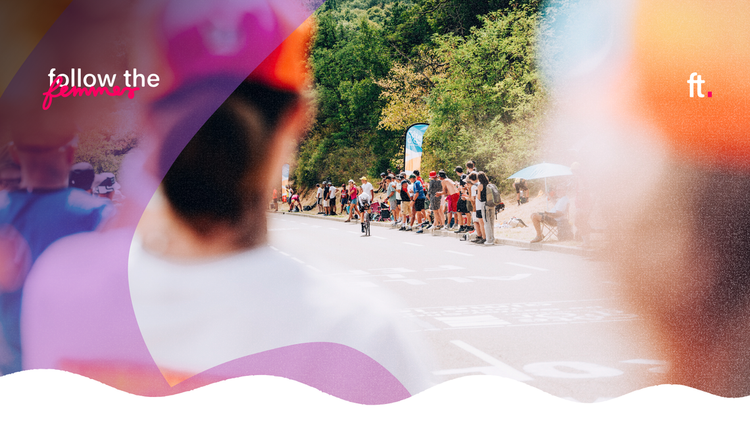
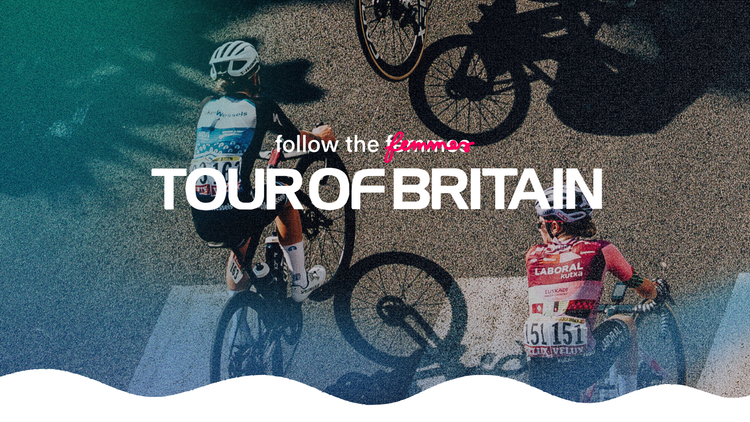
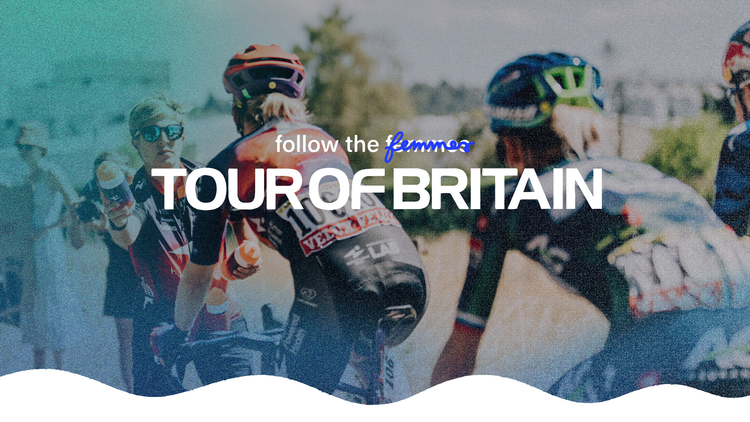
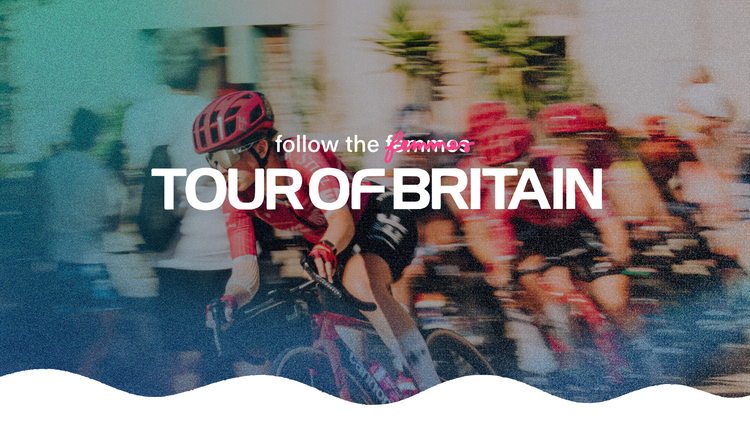
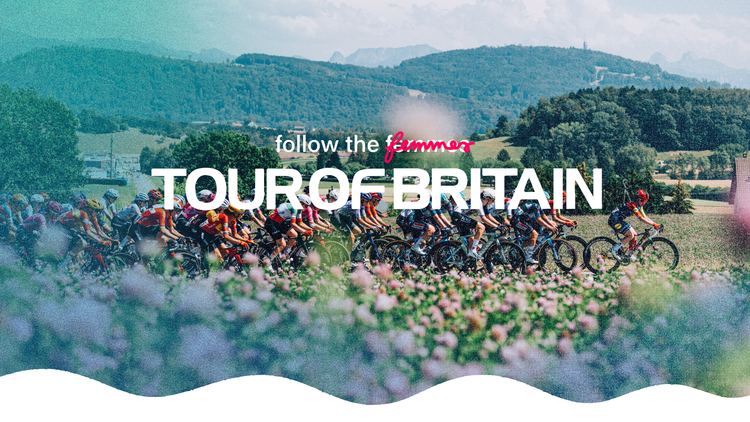
Images by photographer, Jess Meniere
For decades there was no Tour de France Femmes like this. Now women are taking centre stage on some of cycling's biggest roads, in front of enormous crowds, with millions watching around the world.
There is something incredibly powerful about simply seeing that.
Women come because they feel part of the movement.
And then they arrive, stand beside the road, meet another fan, see the team buses, watch the riders warming up, hear someone's story, witness the emotion at the finish…
And eventually they find their femme.
The rider whose personality resonates with them. The rider whose story reminds them of themselves. The rider they want to succeed.
And suddenly they're no longer just supporting women's cycling.
They're a fan.
And fans come back.
That's the opportunity I believe exists in women's cycling right now.
We have spent years building the sport. Now we need to build its characters.
Women's cycling has understandably spent much of its growth phase focused on performance.
Results. Watts. Race coverage. Rankings. Transfers.
All of that matters of course.
But if we want to build a truly sustainable sport - and particularly if we want to bring more women into its audience - I believe we need to go further.
We need people to know the women underneath the helmets.
What makes them laugh? What scares them? Why do they race? What have they sacrificed to be here? Who are they when the race is over?
Because connection doesn't happen through a result sheet.
It happens through stories.
That was the idea behind our small experiment at this year's Tour.
With the support of Castelli, rather than waiting until everything was perfect, we decided simply to start.
We profiled riders. We spoke to fans. We tried to ask slightly different questions. We showed some of what happens behind the scenes. I unpacked each stage from my perspective as a professional rider. And we tried, wherever possible, to capture the people and emotion surrounding this extraordinary race.
It was far from perfect.
We didn't have the access we had hoped for. We didn't receive photography accreditation. We had a tiny team and very long days.
But perhaps that made me even prouder of what we created.
Our photographer, Jess Meniere was extraordinary. Without the access a photographer would normally rely on, she found a unique way, again and again to get the shot. She climbed, walked, searched, asked, improvised and somehow captured beautiful images every day. She would exercise early in the morning, spend the entire day moving between locations, arrive late at the hotel and then start editing.
Alba joined me on the ground, gathering interviews, BTS shots and helping us chase stories while also helping Jess get from one place to another.
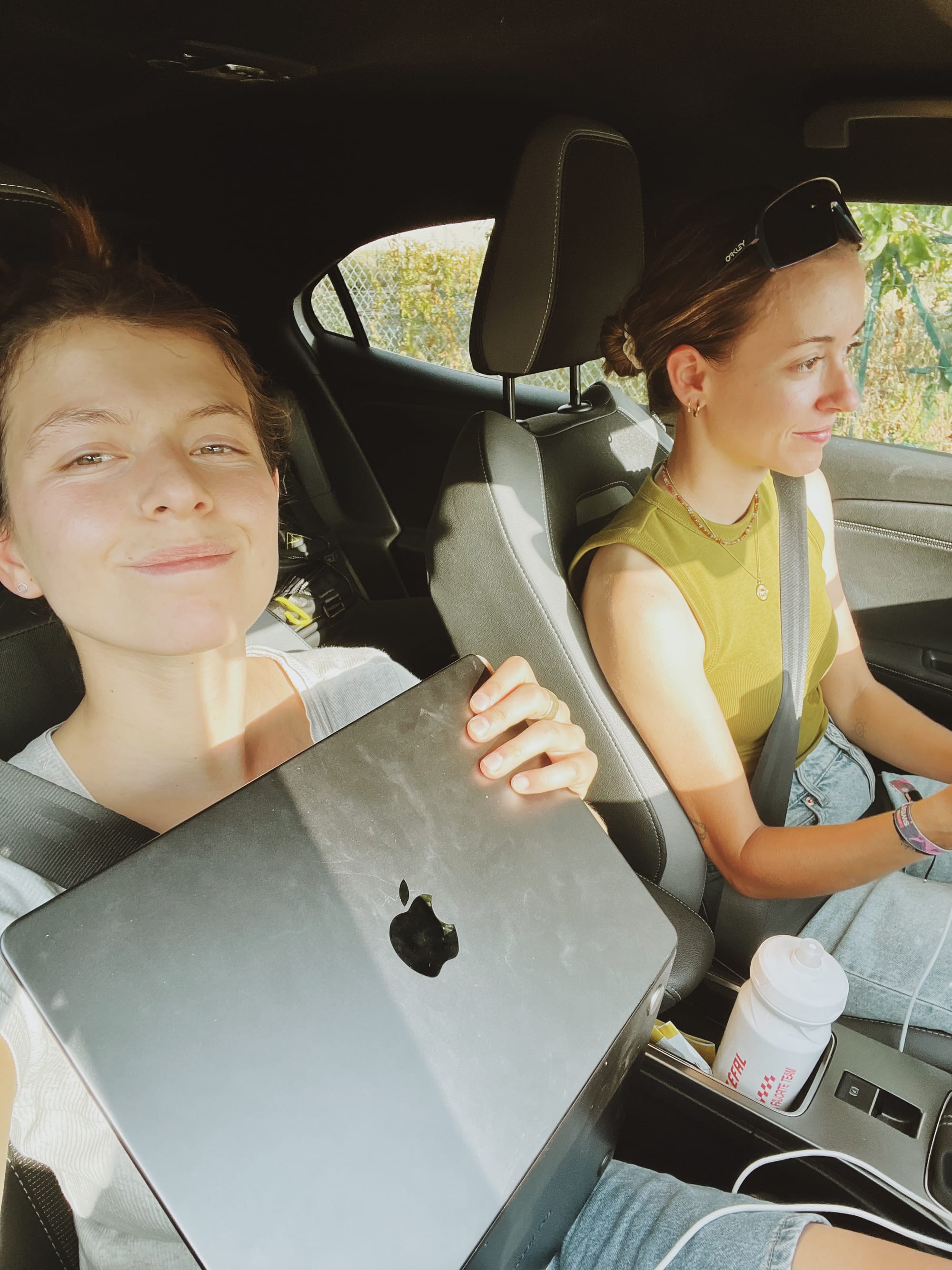
And thousands of kilometres away in South Africa, Courteney was waiting for all of us - often late into the night - to turn the chaos into something that could actually be shared with the world.
It reminded me that storytelling, just like bike racing, is a team sport.
There is something we need to protect.
Following the Tour from this side also made me conscious of something else.
Women's cycling is professionalising incredibly quickly.
That is a very good thing.
But with professionalisation comes more structure. More barriers. More protected spaces. Teams understandably become more careful with riders' time. Access becomes more controlled. Riders become bigger sporting personalities.
We experienced some of that ourselves this year.
And yet, thankfully, women's cycling remains remarkably human.
You can still walk through many of the team areas. You can stand metres from the riders. Children can call their heroes' names. Fans can have conversations. You can see tears, frustration, nerves, joy and exhaustion.
I hope we never lose that.
Because underneath all the extraordinary athletic performance, women's cycling is still wonderfully raw.
It is full of emotion.
And perhaps that's because, for so many of the people involved, this sport is still driven overwhelmingly by passion.
Of course the commercial side is growing. Salaries are improving. Investment is increasing. The sport is becoming a serious business - as it should.
But speak to the riders, staff, directors, photographers, mechanics and people building women's cycling and you hear the same sentiment again and again:
I feel like I can make a difference here.
People feel that what they contribute can genuinely change an athlete's career or help move the entire sport forward.
I understand that feeling.
Because even as I approach the final months of my professional racing career, I don't feel like I'm finished with women's cycling.
In many ways, I feel like I'm only beginning.
So what comes next?
This Tour, for us, was an experiment.
A first attempt at something I have imagined for a long time.
I want to continue building a platform that brings people closer to the women inside this sport. More access. Better storytelling. More personality. More emotion. More opportunities for fans to find the riders they identify with and want to follow.
I want us to understand the female fan better - not simply assume that what has worked for men's cycling will automatically work for women.
And through the next chapter of my life, including my work with Team Amani, I also want to help create pathways so that the women we see on the start line of the Tour increasingly represent more of the world.
There is still so much to build.
But that is exactly what makes this moment so exciting.
The Tour de France Femmes avec Zwift is only five editions old.
Think about that.
Look at the crowds. Look at the racing. Look at the investment. Look at the women and girls standing beside the road. Look at the communities forming around it.
We are watching sporting history being built in real time.
And perhaps my biggest takeaway from these 9 days is that the opportunity in front of us is much bigger than simply creating a successful women's bike race.
We have the opportunity to build a sport people feel they belong to.
A sport where women see themselves.
A sport where fans don't simply follow results, but fall in love with characters.
A sport built on performance, yes - but also on passion, emotion, connection and community.
That's what makes women's cycling special.
And that's what I want to help protect, grow and share.
The Tour might be over for another year. But this movement is only getting started.
— Ashleigh

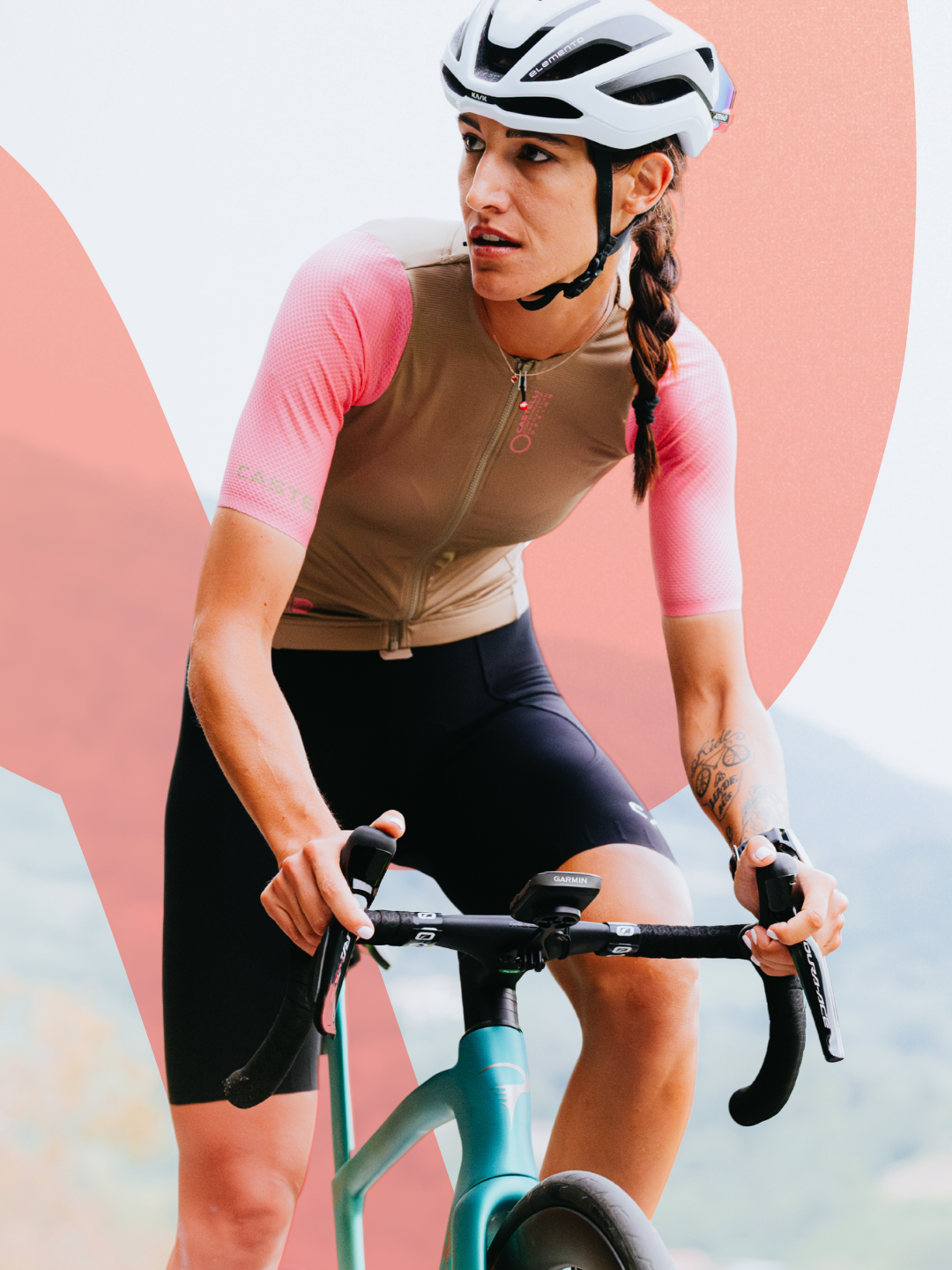
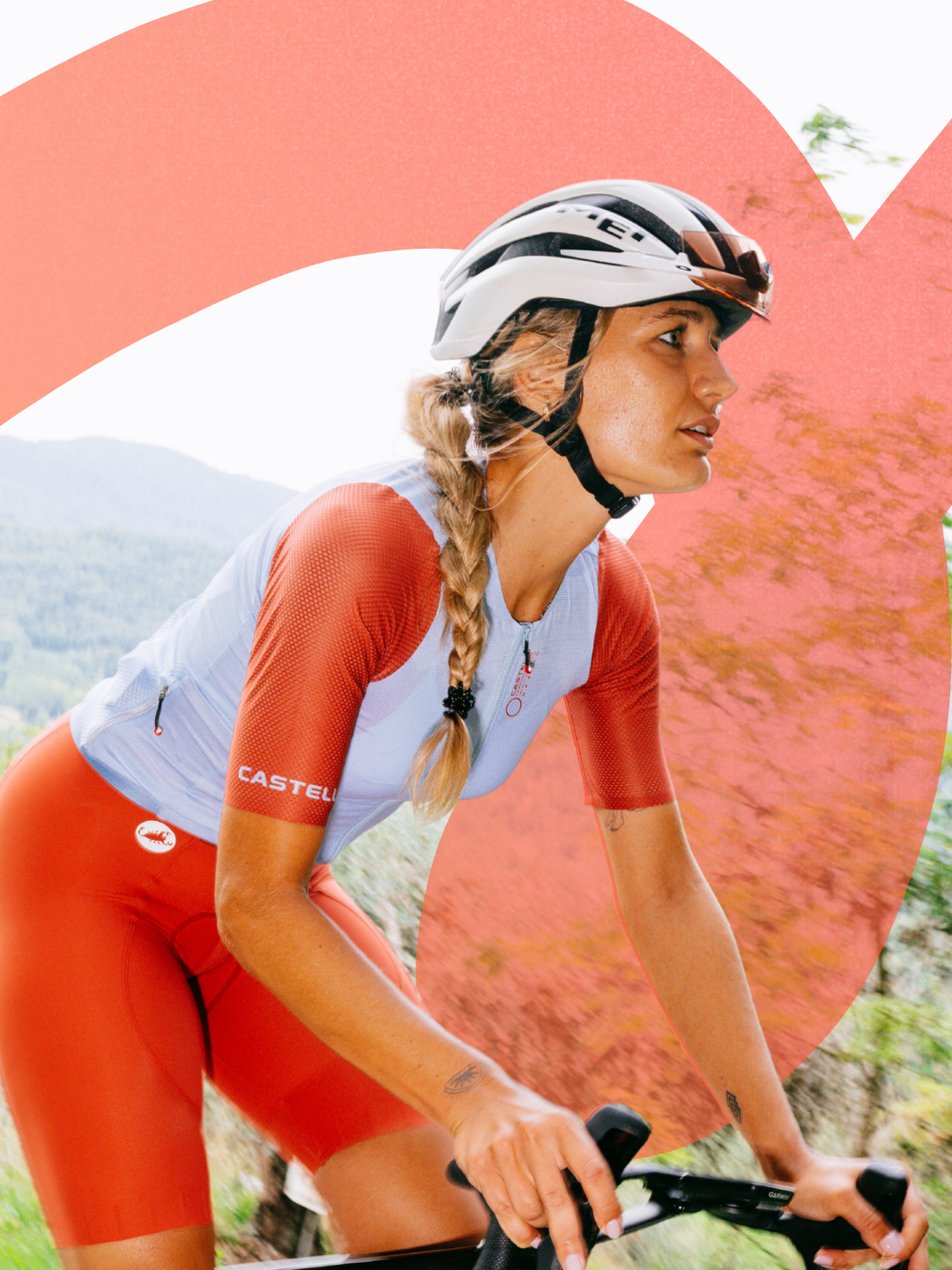
Reminder that Castelli is giving one lucky winner a premium set of cycling kit !!!
Stand a chance to WIN a Set of Premium @castellicycling Kit - their Corretto W Jersey and matching bib!
To enter:
✅️ Sign up / be a member of the Rocacorba Collective
✅️ Engage with our GIVEAWAY post by tagging your #FollowTheFemmes Watch Party in the comments and mentioning your favourite thing about the TDFFaZ 2026 edition so far!
✅️ Make sure you are following @rocacorbacollective and @castellicycling
Thats it! JOIN THE MOVEMENT in celebrating LES FEMMES 💛💛

Member discussion